Al-Hikmah Don Urges FG to Extend Student Loan Scheme to Students in Private Universities
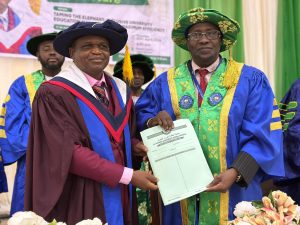
Prof Olaolu Akinnubi, inaugural Lecturer and the Vice-Chancellor, Prof Lateef Oladimeji
Professor Olaolu Paul Akinnubi of the Department of Educational Management and Counselling, Faculty of Education, Al-Hikmah University, Ilorin, has urged the Federal Government to extend the student loan scheme to students in private universities in order to reduce dropout rates in such institutions.
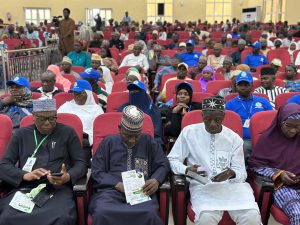
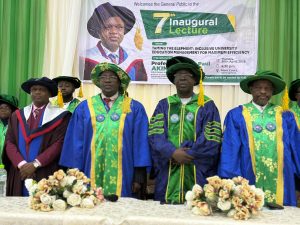
Akinnubi made the call while delivering the 7th Inaugural Lecture of Al-Hikmah University, held at the Atere Campus, Ilorin, on Thursday.
The professor also advocated that private universities be granted access to the Tertiary Education Trust Fund (TETFund) to boost infrastructural development and enhance the productivity of academic staff.
He further called on both the Federal and State Governments to ensure the recruitment of adequate academic staff across university programmes on merit, to prevent the overburdening of existing personnel.
“Universities in Nigeria, especially privately owned institutions, grapple with staffing challenges, including a shortage of qualified academic and administrative personnel. This often results in increased workloads, staff burnout, and reduced productivity,” he said.
Akinnubi urged governments to be proactive in addressing the concerns of the Academic Staff Union of Universities (ASUU) and Student Union Governments to avert frequent industrial actions and ensure a stable academic calendar.
He also charged the National Universities Commission (NUC) to mandate Nigerian universities to submit annual reports on their internal quality assurance mechanisms for proper auditing and compliance with established standards.
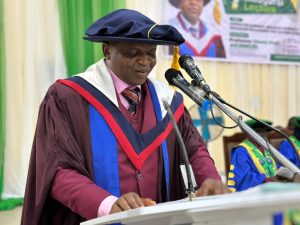
The don advised the Federal Government to strengthen the capacity of the NUC through adequate manpower and logistical support to enable effective oversight of the country’s 309 universities spread across the six geopolitical zones.
He warned that inconsistencies in quality assurance mechanisms undermine the credibility and standards of Nigerian universities, noting that issues such as academic dishonesty and poor assessment practices compromise educational and research outcomes.
Akinnubi further urged university senates to adopt stringent measures to curb academic dishonesty in assignments, research papers, projects, dissertations, and theses.
Highlighting systemic challenges, he decried the prevalence of corruption and nepotism within the university system, which he said contributes to inefficiency and unfair practices.
According to him, common forms of corruption in Nigerian universities include examination malpractice, admission racketeering, hostel profiteering, student extortion, abuse of office, certificate forgery, sexual harassment, and embezzlement of funds.
“Other practices include writing favourable confidential reports for undeserving staff or students, contract inflation, lobbying for postings to lucrative departments or committees, bribery, absenteeism, truancy, and salary padding,” he added.
The inaugural lecturer stressed the need for university visitors, governing councils, regulatory bodies, and management to prioritise the digitalisation of administrative processes, including admissions, approvals, and procurement.
He noted that such reforms would minimise paperwork, simplify procedures, and enhance transparency across the university system.