Malaria: Kwara to distribute 2 million mosquitoe nets — Commissioner
By Fatima Mohammed-Lawal
The Kwara State Commissioner for Health, Dr Amina El-Imam says the State will commence distribution of 2 million mosquitoe Long-Lasting Insecticide-Treated Nets (LLINs) to households across all Local Government Areas.
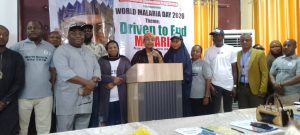
El-Imam stated this in Ilorin during a news conference organised as part of the activities to commemorate World Malaria Day 2026.
She stated that the theme of the day is entitled: “Driven to End Malaria: Now We Can. Now We Must,”.
El-Imam explained that the day serves as a clarion call for urgent action and the effective use of new tools and innovations to save lives.
She emphasised the need for Nigeria to join the 47 countries and one territory that have been certified malaria-free by WHO, including recent additions like Egypt and Timor-Leste.
According to her, by June 2026, Kwara will commence the continuation of the routine yearly house-to-house distribution of malaria preventive drugs (SPAQ) for children aged three to 59 months during the peak of the rainy season.
“In selected public health facilities, malaria treatment is free. This includes free Rapid Diagnostic Test (RDT) kits for free testing, free treatment with Artemether-Lumefantrine for uncomplicated malaria and free Intravenous Artesunate for severe cases,” she said.
The commissioner observed that Malaria remains a significant public health threat and a development challenge, adding that in 2024, the global burden rose to an estimated 282 million cases and 610,000 deaths.
“The African region bears 94 percent of cases and 95 percent mortality, while Nigeria remains at the epicenter of this crisis, accounting for close to a quarter 24.3 percent of global malaria cases and over a quarter 30.3 percent of global deaths from malaria.
“On average, two out of every visit to the hospital are malaria cases, while three of five hospital admissions are due to malaria cases and are mainly children under five.
“Despite these daunting national figures, we have reason for hope. Globally, interventions since 2000 have averted 2.3 billion cases and 14 million deaths. In Nigeria, national malaria prevalence has seen a remarkable decline from 42 percent in 2010 to 15 percent in 2025,” she said.
El-Imam pointed out that there is progress in the control of Malaria in Kwara State, adding that the State has emerged as a technical model for sub-national success.
“The State have procured and distributed Sulfadoxine Pyrimethamine for the Intermittent Preventive Treatment of Malaria in Pregnancy (IPTp) to over 350 public health facilities across the State,” she said.
In his address, the World Health Organisation (WHO) Regional Director for Africa, Dr Mohammed Janabi said the tiny mosquito continues to cause enormous harm and every year, malaria kills hundreds of thousands of people, most of them young African children.
Janabi, who was represented by Dr Emmanuel Eyitayo, the Kwara State WHO Representative added that more than 10 countries have increased domestic financing for malaria programmes since Jan. 2025 in 25 countries are rolling out malaria vaccines, helping protect around 10 million children each year.
“Next-generation mosquito nets designed to overcome insecticide resistance now
account for the vast majority of newly distributed nets.
“Digital technologies are improving our ability to predict, detect and respond to outbreaks. Plus new vector control innovations are expanding our toolbox.
But progress is not guaranteed. Funding gaps continue to slow the response,” he said.
Earlier in his presentation, the Head of Malaria Case Management in Kwara, Dr. Kazeem Oladapo, who spoke on overview of Malaria in Kwara, explained that Kwara has made significant strides in scaling up Malaria control interventions.
According to him, this is through the support from Global Funds and other global partners.
He observed that despite efforts put in controlling the disease, it continues to be health challenge in the country and that Nigeria account for 24 percent of global Malaria case in the world.
“Malaria accounts for 20 to 30 percent of hospital admission especially for children under five year old,” he lamented.
Oladapo, however, reiterated the resolve of the government and partners in eliminating Malaria, saying that the disease is preventable, treatable and eliminable. (NAN)