Al-Hikmah VC Urges Universities to Harness Digital Innovation for Inclusive, Holistic Education
By Felix Ajide
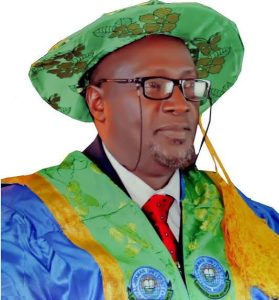
The Vice-Chancellor of Al-Hikmah University, Ilorin, Prof. Lateef F. Oladimeji, has called on universities and other educational institutions to harness digital innovation to improve teaching, learning and research without losing the human values at the heart of education.
Oladimeji made the call on Monday, while delivering the keynote address at the 2026 Faculty of Education Biennial Conference of Al-Hikmah University, held at the university’s Moot Court, Adeta.
The conference, organised by the Faculty of Education, had as its theme: “Re-imagining Education: Embracing Digital Innovation and Inclusive Practices for Complete Well-being in a Dynamic World.”
The Vice-Chancellor said the rapid transformation brought about by digital technologies, coupled with changing social and economic realities, required educators to rethink not only the tools used in education but also its purpose, practice and overall experience.
He stressed that technology should not be adopted merely because it is fashionable, but because it could produce meaningful improvements in teaching, learning, research and community engagement.
According to him, educational institutions should combine virtual learning environments, learning analytics, digital content and emerging technologies with sound pedagogy and the human presence that gives education its moral and relational character.
Oladimeji also warned against allowing digital transformation to deepen existing inequalities, urging institutions to address the digital divide and remove barriers confronting learners with disabilities and those disadvantaged by poverty, location or other circumstances.
He said inclusive education should be regarded as a fundamental measure of quality education, calling for accessible learning resources, flexible learning pathways, gender-responsive practices and adequate support systems for all learners.
The Vice-Chancellor further advocated greater attention to the mental and physical well-being of students and staff, saying the success of an educational institution should not be measured solely by examination results and graduation figures.
He identified mental health, ethical judgement, creativity, resilience, social responsibility and a sense of belonging as essential components of meaningful education, while urging institutions to strengthen guidance and counselling, health services, pastoral care and peer-support systems.
He equally called for continuous professional development for teachers, researchers and administrators, as well as the adoption of authentic and competency-based assessment methods capable of measuring what learners can understand, create, communicate and contribute.
Oladimeji emphasised that academic integrity, data protection and responsible use of artificial intelligence must remain non-negotiable as educational institutions embrace emerging technologies.
He also called for stronger partnerships among universities, schools, government, industry, civil society, families and international organisations to promote research, entrepreneurship, digital skills, curriculum renewal and lifelong learning.
The Vice-Chancellor said Al-Hikmah University had taken steps to promote digital innovation, inclusive practices and complete well-being through various programmes and facilities, assuring that the institution would continue striving to become one of the best universities in Nigeria.
Also speaking, the Acting Dean of the Faculty of Education, Dr. Rasheedat M. Oladimeji, said education must go beyond the transmission of knowledge by preparing learners to confront a rapidly changing world, develop useful skills, build confidence and live meaningful lives.
She noted that digital platforms, artificial intelligence and other educational technologies could improve access to information and make learning more flexible and engaging, but stressed that technology should support rather than replace teachers and the human relationships central to education.
The Acting Dean said the conference provided an opportunity to examine critical issues including teacher and lecturer development, digital literacy, artificial intelligence, inclusive education, assessment, educational leadership, policy and research.
She urged participants to translate their deliberations into practical solutions to educational challenges.
She reaffirmed the Faculty’s commitment to producing teachers, researchers and educational leaders who are knowledgeable, innovative, responsible and compassionate.
Dr Oladimeji expressed appreciation to the university’s Founder, Chief (Dr) Abdulraheem Oladimeji, the Jagunmolu of Igbaja and Asiwaju of Igbomina land, for his financial support towards the conference and to the Vice-Chancellor and university management for providing an enabling environment for its success.
The Chairman, Conference Organising Committee, Prof. L. A. Yahaya in his remarks said the theme of the conference titled “Re-imagining Education: Embracing Digital Innovation and Inclusive Practices for Complete Well-being in a Dynamic World,” is both timely and compelling and requires that we look beyond education as mere transmission of information.
He said “it challenges us to imagine learning systems that develop the whole person: intellectually capable, digitally confident, emotionally balanced, ethically grounded, socially responsible and prepared to contribute meaningfully to a changing world.
“However, technology must remain a means to human development, not an end in itself. Our central question must therefore be: how can innovation make education more humane, more equitable and more responsive to the needs of every learner?” he added.