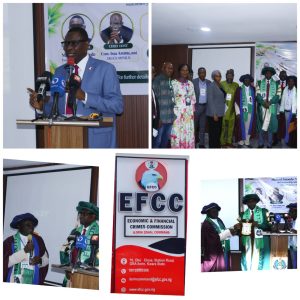
EFCC: Nigeria Must Dismantle Networks Behind Illegal Mining, Resource Theft – Olukoyede
EFCC Chairman warns that illegal mining fuels insecurity, organised crime; says Commission has secured forfeiture of 102 tonnes of solid minerals
The Executive Chairman of the Economic and Financial Crimes Commission (EFCC), Mr Ola Olukoyede, has called for a comprehensive, zero-tolerance approach to illegal mining, resource theft and corruption, warning that criminal networks operating within Nigeria’s solid minerals sector pose a serious threat to the nation’s economy and security.
Olukoyede said tackling illegal mining required more than arresting individuals at mining sites, stressing the need to dismantle the financial networks, powerful financiers, corrupt officials, mineral buyers and other beneficiaries behind the illegal exploitation of the country’s natural resources.
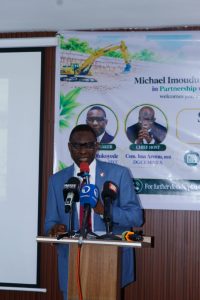
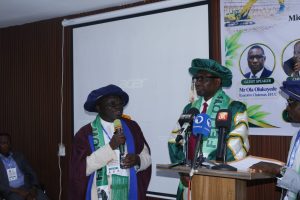
The EFCC chairman made the call on Tuesday in Ilorin, Kwara State, while delivering a keynote address titled:
“Uprooting the Roots of Resource Theft: A Zero-Tolerance Approach to Mining Corruption and Increasing Insecurity in Nigeria” at a public lecture and capacity-building workshop organised by the Michael Imoudu National Institute for Labour Studies in collaboration with the Human and Environmental Development Agenda (HEDA).
He described Nigeria’s mineral resources, including gold, lithium, tin, lead, zinc, columbite and tantalite, as enormous economic assets capable of transforming the country’s economic fortunes if properly managed.
According to him, increasing global demand for critical minerals, driven by technological advancement, renewable energy and modern manufacturing, presents Nigeria with an opportunity to diversify its economy and strengthen its position in the global market.
He, however, lamented that corruption, illegal exploitation, resource theft and insecurity had continued to undermine the country’s ability to maximise the benefits of its mineral wealth.
“Mineral wealth, on its own, guarantees nothing. What determines whether it becomes a blessing or a burden is its management,” he said.
Olukoyede explained that investigations by the EFCC had revealed that illegal mining was not merely the activity of individuals operating without licences but involved sophisticated networks of local and international criminal interests.
He noted that behind illegal mining operations were financiers, licence holders, mineral buyers, transportation agents, compromised government officials and other beneficiaries who facilitated the movement and conversion of illegally obtained resources into financial proceeds.
He said: “Dealing with illegal mining involves breaking an intricate chain of fraudulent actors: young men carrying shovels, their financiers, buyers of the minerals, compromised officials facilitating the operations, beneficiaries of the proceeds and other actors.
“A serious enforcement strategy must move from the pit to the purse.”
The EFCC boss clarified that the Commission was not responsible for regulating the mining sector or issuing mining licences, explaining that its intervention focused on corruption, fraud, money laundering, illicit financial flows and other financial crimes associated with illegal mining.
He maintained that following the money remained one of the most effective ways of exposing and dismantling criminal networks involved in resource theft.
According to him, illegally extracted minerals eventually enter commercial and financial channels through payments, bank accounts, business transactions and asset acquisitions, providing investigators with opportunities to trace the proceeds and identify the ultimate beneficiaries.
Giving an account of the Commission’s enforcement activities, Olukoyede disclosed that between October 2023 and July 2026, the EFCC recorded 52 illegal-mining cases within its specialised enforcement portfolio, resulting in investigations, prosecutions and convictions.
He added that the Commission had also secured the forfeiture of 102 tonnes of solid minerals as part of efforts to recover resources illegally exploited from the country.
On the relationship between illegal mining and insecurity, the EFCC chairman warned that unregulated mineral exploitation created opportunities for criminal groups to establish economic influence in vulnerable communities.
He explained that such activities could trigger extortion, smuggling, violent competition over mining territories and the financing of other criminal operations.
“Once criminal interests begin to control economic activities in a community, the consequences can extend far beyond lost royalties. They can include extortion, smuggling, violence, competition over territory and the financing of other forms of criminality,” he stated.
Olukoyede insisted that illegal mining should no longer be viewed merely as a regulatory or licensing challenge but as an economic, financial and organised-crime problem with serious national security implications.
He warned that public officials who abuse their positions to facilitate illegal mining, manipulate licences or launder proceeds from resource theft would not be spared, assuring that the EFCC would continue to pursue all individuals implicated by credible evidence.
The EFCC chairman, however, emphasised that the Commission’s enforcement activities would remain professional, evidence-based and consistent with the principles of due process.
He identified fragmented intelligence and inadequate information-sharing among government institutions as major obstacles to tackling sophisticated economic crimes.
He called for stronger operational collaboration among mining regulators, financial intelligence institutions, law enforcement agencies, customs authorities, revenue agencies and other relevant institutions.
According to him, effective cooperation must go beyond meetings and memoranda of understanding to embrace intelligence sharing, coordinated investigations and joint enforcement operations.
He explained that investigators should be able to trace suspicious mining activities from the ownership of licences to mining sites, mineral buyers, financial transactions and the ultimate beneficiaries.
“That is how you dismantle a network rather than merely arrest an individual,” he said.
Olukoyede also called for greater involvement of host communities, traditional rulers, community associations, youth organisations and civil society groups in monitoring mining activities and reporting suspicious operations.
He stressed that community participation was essential to identifying illegal mining activities and preventing criminal interests from taking control of local economic resources.
The EFCC chairman further underscored the importance of organised labour in the campaign against resource theft, noting that a properly governed mining sector should generate decent employment opportunities alongside government revenue through royalties and taxes.
He said labour unions had legitimate responsibilities to demand lawful mineral extraction, workers’ welfare and decent working conditions within the mining industry.
He also urged civil society organisations and the media to sustain scrutiny of mineral ownership, beneficial interests, production figures, community impact and government revenues, describing transparency as an important safeguard for legitimate investment.
Olukoyede observed that economic crimes persisted because perpetrators often believed the financial benefits outweighed the risks of detection and prosecution.
He said the EFCC’s objective was therefore not simply to increase arrests but to make resource theft difficult to organise, conceal and profit from.
Reaffirming the Commission’s commitment to the fight, he said the EFCC would continue to investigate financiers and facilitators, trace illicit proceeds, recover criminal assets and prosecute suspects based on available evidence.
He urged both state and non-state actors to join forces in protecting Nigeria’s mineral resources, insisting that the country’s natural wealth must translate into tangible benefits for its citizens rather than enrich criminal networks.
“Nigeria’s mineral wealth ultimately belongs to Nigerians. It is for this reason we are tackling illegal mining, resource theft and insecurity.
“Nigeria’s mineral wealth must work for Nigeria. Both state and non-state actors must fight resource theft. There is no other way. We can and must all do it,” he said.
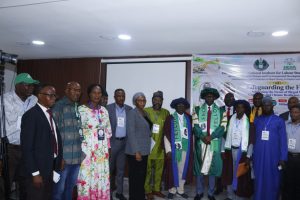
The public lecture and capacity-building workshop brought together stakeholders to examine the implications of mining corruption, resource theft and insecurity for Nigeria’s economic development, national security and the welfare of citizens.
Editorial note