NICRAT, KWSG Targets 200 Women For Free Cervical Cancer Screening
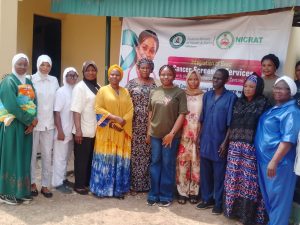
At least 200 women of reproductive age in Kwara state have been earmarked to benefit from a free Cervical Cancer screening programme organised by the
the National Institute for Cancer Research and Treatment (NICRAT), in collaboration with the State Government, as part of efforts to promote early detection and prevent avoidable deaths from the disease.
The initiative, being implemented in six states representing the country’s six geopolitical zones, seeks to integrate cancer prevention and screening services into existing family planning programmes at primary healthcare centres, thereby making essential preventive healthcare more accessible to women.
Speaking at the Inauguration of programme, in Okelele area of Ilorin , Kwara state ,the Director-General, National Institute for Cancer Research and Treatment (NICRAT) Professor Usman Aliyu, said the initiative was part of the institute’s efforts to incorporate cancer prevention and early detection into routine healthcare delivery.
Represented by the Senior Scientific and Partnership Liaison Officer at the Institute, Deloraine Dennis, the Director-General , said the exercise is designed to raise awareness about cervical cancer, encourage routine screening and ensure that women who test positive for Human Papillomavirus (HPV) are linked to appropriate medical care.
According to him the second phase of the intervention focused on integrating cervical cancer screening into family planning services, allowing women to access screening while visiting healthcare facilities for reproductive health services without making separate appointments.
Professor Aliyu noted that the pilot programme is targeting 200 beneficiaries in each participating state, with plans to expand its reach to more than 100,000 women as implementation progresses nationwide.
Prof. Aliyu also disclosed that the Institute was promoting the use of its National Cancer Screening Registry, a digital platform designed to facilitate access to cancer screening services and improve the monitoring of beneficiaries.
He described the rising incidence of cancer as alarming and called for sustained public enlightenment, regular screening and early medical intervention to reduce the disease burden in Nigeria.
“Every Nigerian woman should get checked, get screened and be aware of the signs and symptoms of these cancers. We encourage women to locate their nearest primary healthcare centre and access screening services,” he said.
The Director General urged women to familiarise themselves with the warning signs of common cancers, including breast, cervical, liver and colorectal cancers, while particularly encouraging women living with HIV to undergo regular cervical cancer screening because of their increased risk.
Prof. Aliyu identified HPV DNA testing as the gold standard for cervical cancer screening, adding that samples could be collected through self-sampling or with the assistance of healthcare providers.
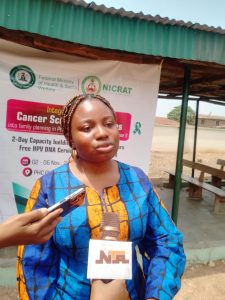
He, however, cautioned that testing positive for HPV should not be interpreted as confirmation of cervical cancer, noting that further investigations would be conducted to establish the actual condition.
“Being positive for HPV does not mean you have cervical cancer. There are other methods we use to confirm whether it is cervical cancer, and where it is confirmed, there are treatment options available,” she explained.
In his remarks, the Consultant and Team Lead of the National Institute for Cancer Research and Treatment (NICRAT), in Kwara, Dr Yahaya Mustapha Makanta, said the state was selected as the North-Central representative for the pilot phase of the national intervention.
He explained that the first phase involved assessing selected primary healthcare facilities to determine their readiness to incorporate cancer prevention services, while the second phase focused on actual cervical cancer screening.
Makanta said the institute was targeting at least 200 women of childbearing age in Kwara, adding that health workers, including counsellors, mobilisers, health educators, records officers and family planning service providers, had received specialised training ahead of the exercise.
According to him, samples collected from beneficiaries would be taken to the laboratory for HPV DNA testing, after which appropriate counselling and referrals would be provided based on the results.
“The providers will help us with sample collection, and the samples will be taken to the laboratory, where the laboratory personnel will carry out the HPV DNA test.
“Those who test negative will be counselled to repeat the screening after 10 years, while those who test positive will be linked to treatment with the support of NICRAT,” he said.
A gynaecologist and facilitator of the programme in Kwara, Dr Jibril Abdullahi Daniyan, described cervical cancer as a major public health challenge, stressing that the disease remained largely preventable through vaccination, regular screening and timely treatment.
Daniyan disclosed that Nigeria records more than 10,000 cervical cancer cases annually, resulting in over 7,000 deaths, a situation he said required urgent and sustained intervention.
He explained that persistent infection with the Human Papillomavirus accounts for more than 70 per cent of cervical cancer cases, noting that the disease generally takes between 10 and 15 years to develop following initial HPV infection.
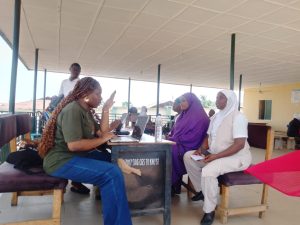
According to him, the lengthy period provides an opportunity for healthcare professionals to identify and treat precancerous conditions before they develop into full-blown cancer.
“Once somebody gets infected with the Human Papillomavirus, it takes about 10 to 15 years in the normal population before it transforms and becomes cancer. So, you have a very long time within which you can catch it and prevent it.
“That is where we want to catch these people, before it becomes cancer. It can be treated. There are various modes of treatment,” he said.
Daniyan noted that the intervention aligned with Nigeria’s cervical cancer elimination strategy, which targets the vaccination of 90 per cent of eligible girls, screening of 70 per cent of women aged 35 and above, and treatment of 90 per cent of women identified with precancerous conditions by 2030.
He added that Nigeria commenced HPV vaccination in 2023 and had since vaccinated more than 18 million girls below the age of 15.
The gynaecologist urged women to take advantage of the free screening opportunity, insisting that no woman should be denied access to preventive healthcare because of financial constraints.
“The most important thing here is to avail all women the opportunity to carry out this screening. It is very, very important because cancer is preventable. It is not right for us to sit back and allow it to kill our women,” he said.
For her part , the Kwara State Family Planning Coordinator, Ministry of Health, Hajiya Bashirat Jattu, described the partnership with the Institute as a significant development in the state’s efforts to strengthen women’s healthcare.
Jattu said the integration of cancer screening into family planning services was a new dimension to the state’s existing interventions, explaining that the government had consistently organised annual cervical cancer screening programmes for women of reproductive age.
She noted that the collaboration would expand access to the services by ensuring that women visiting primary healthcare facilities for family planning could also benefit from cancer screening.
According to her, community mobilisation and sensitisation activities had commenced ahead of the exercise, with health educators and community mobilisers visiting households to encourage women to participate.
“The activities started on Monday, and we have our community mobilisers and educators going around the communities, conducting house-to-house sensitisation to encourage women to come and access the cancer screening services,” she said.
Jattu emphasised that the screening was free, urging women to take advantage of the opportunity to know their health status and seek medical attention where necessary.
She reaffirmed the state government’s commitment to strengthening preventive healthcare through public enlightenment, early detection and improved access to essential health services.
Some of the beneficiaries who spoke during the exercise commended the Institute and the Kwara State Government for making the screening available at no cost, describing the intervention as timely and beneficial to women’s health.
One of the beneficiaries, Fatimat Yusuf, said the programme had relieved women of the financial burden associated with accessing the screening services individually.
She noted that the exercise would enable participants to understand their health conditions and take necessary steps towards protecting their future well-being.
Yusuf urged other women who had yet to undergo cervical cancer screening to come forward and take advantage of the opportunity.
Similarly, Mrs Ibrahim Balikis commended the organisers for the initiative, praying for the success of the government and urging more women to participate so they could know their health status.
Another beneficiary, Sidikatu Sani, said the programme would help women detect possible health challenges early and save lives.
She appealed to the government to sustain the intervention and extend similar programmes to women across different communities and levels of society.
The beneficiaries maintained that free screening programmes of this nature would encourage more women to prioritise their health, particularly those who cannot afford the cost of such medical services.