Tinubu Urges UNILORIN Graduates to Embrace Innovation, Create Jobs, Says NELFUND Disbursed Over N322bn to 1.6m Students
.….. NELFUND has disbursed over N322bn to 1.6m students
By Felix Ajide
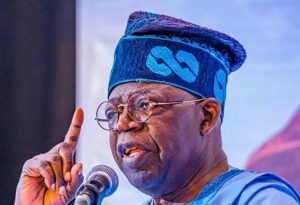
Ilorin – President Bola Ahmed Tinubu has urged graduates of the University of Ilorin (UNILORIN) to leverage their knowledge and skills to create jobs, drive innovation and contribute to national development, rather than depend solely on paid employment.
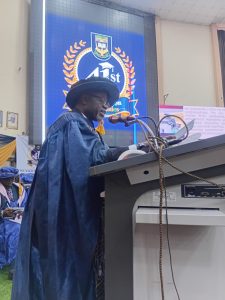
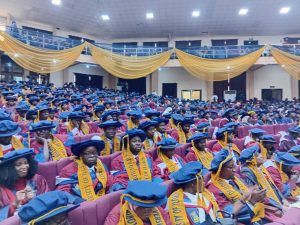
Tinubu gave the charge at the university’s 41st Convocation Ceremony, held in Ilorin last Friday, while reaffirming his administration’s commitment to expanding access to higher education, strengthening research and equipping Nigerian youths with the skills needed to compete in a rapidly changing global economy.
The President, who was represented by a delegation, said university education should equip graduates not only with academic qualifications but also with the capacity to solve societal problems, generate economic opportunities and provide responsible leadership.
“In a world increasingly shaped by digital technology and artificial intelligence, I encourage you not only to seek employment, but also to create it. Become innovators, entrepreneurs, researchers, and problem solvers,” he said.
He challenged the graduating students, whom he described as the Class of 2026, to make excellence their standard, integrity their compass and service their enduring commitment, stressing that Nigeria needed their creativity, patriotism and enterprise to build a prosperous future.
Tinubu said graduation should be regarded not as the end of learning but as the beginning of greater responsibility, urging the graduates to deploy their knowledge in addressing the country’s developmental challenges.
He commended the university for its reputation for academic excellence, institutional discipline, relative industrial stability and prudent resource management, describing universities as critical institutions for developing skilled manpower, advancing research, nurturing leadership and generating innovations.
The President expressed particular encouragement over UNILORIN’s research achievements in areas such as stroke treatment and artificial intelligence-powered electrocardiogram testing, noting that such innovations demonstrated the capacity of Nigerian universities to contribute to solving real-world problems.
He said his administration recognised education as a strategic investment in Nigeria’s future and would continue to support initiatives aimed at improving teaching and learning, expanding research capacity and preparing graduates for the demands of an increasingly interconnected world.
The President said the Renewed Hope Agenda placed education at the heart of national development, adding that financial constraints should not prevent eligible Nigerian students from accessing tertiary education.
He disclosed that the Nigerian Education Loan Fund (NELFUND), established by the Federal Government in April 2024, had disbursed more than N322 billion to over 1.6 million students nationwide as of August 2026.
According to him, the disbursement comprised N192 billion for tuition and institutional fees in 319 public tertiary institutions and N129 billion for students’ upkeep allowances.
“Through NELFUND, we are easing the financial burden on families and expanding opportunities for young Nigerians,” he said.
Tinubu also highlighted the role of the Tertiary Education Trust Fund (TETFund) in supporting infrastructure and research, alongside initiatives such as the 3 Million Technical Talent Programme and the Student Innovation Challenge, which he said were designed to develop digital skills, encourage entrepreneurship and promote innovation.
On the welfare of university personnel, the President said a stable tertiary education system required motivated staff, a stable academic calendar and constructive engagement among government, university management and staff unions.
He disclosed that the Federal Government had signed agreements with academic and non-teaching staff unions in universities, polytechnics and colleges of education on the payment of the Consolidated Academic Tool Allowance (CATA) and Consolidated Non-Teaching Tool Allowance (CONTA), respectively, with effect from Jan. 1, 2026.
He said the agreements recognised the distinct but complementary contributions of academic and non-teaching personnel to quality education and national development.
The President also acknowledged the economic difficulties experienced by Nigerians during the ongoing reform process, noting that the removal of petroleum subsidy and the unification of the foreign exchange markets had imposed significant adjustment costs on households and businesses.
He explained that the reforms were intended to address pressure on public finances and establish a stronger foundation for sustainable development, adding that improved public revenue could support investments in education, healthcare, infrastructure and other essential services.
As the country prepares for the 2027 general elections, Tinubu urged Nigerian youths to participate peacefully and responsibly in the electoral process.
He cautioned them against political thuggery, intimidation, hate speech and the spread of fake news, stressing that elections should be contests of ideas rather than violence.
The President urged citizens to scrutinise the records and programmes of political candidates, engage in constructive debate and hold public officeholders accountable through lawful means.
Abdulrazaq reaffirms education commitment
Similarly, Gov. AbdulRahman AbdulRazaq of Kwara has reaffirmed his administration’s commitment to investing in education as a catalyst for sustainable development, social mobility and economic growth.
Abdulrazaq, represented by his Deputy,
Elder Kayode Alabi, said meaningful investment in education must extend beyond physical infrastructure to include teaching quality, curriculum relevance, research capacity and institutional development.
He said his administration had prioritised the sector through initiatives such as the completion of the University and Law Complex at Kwara State University and the establishment of the Kwara State University of Education to strengthen teacher training.
The governor also highlighted partnerships with stakeholders, including TETFund, to upgrade learning facilities, equip laboratories with modern resources and advance digital learning systems at the basic education level.
On students’ welfare, he said the state government had sustained its bursary and scholarship programmes to expand access to education and ease the financial burden on students and their families.
Abdulrazaq commended UNILORIN’s management, Governing Council, Senate, lecturers and other members of staff for sustaining high academic standards.
He particularly acknowledged the university’s recent achievement as Nigeria’s leading institution for research quality, describing it as evidence of its commitment to scholarship, research and innovation.
The governor congratulated the graduates and urged them to deploy their knowledge with integrity, creativity and discipline in addressing challenges confronting their communities and the country.
He stressed that university education should be seen not merely as a pathway to employment but also as a platform for creating opportunities, developing solutions and contributing to national prosperity.
Convocation lecturer advocates purposeful leadership
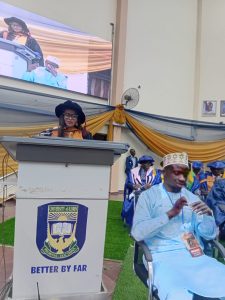
In her convocation lecture, titled “From Lecture Hall to Cabinet Room: The Journey from Academia to Public Leadership,” Sierra Leone’s Minister of Technical and Higher Education, Hon. Dr. Haja Ramatulai Wurie, called for purposeful, evidence-based and inclusive leadership.
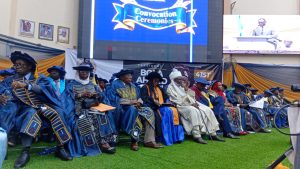
Wurie said leaders should focus on building people and institutions that would outlast them, adding that leadership must be anchored in preparation, consistency, accountability and a clear sense of purpose.
She advised leaders to build alliances, seek counsel and avoid isolation, while treating scrutiny as an opportunity for accountability, learning and improvement.
The minister said universities should function as national problem-solving institutions by generating knowledge, developing talent, advancing innovation, providing policy evidence and nurturing entrepreneurship.
She emphasised the importance of aligning research with national priorities, urging universities to identify the knowledge required to address pressing societal needs and improve public decision-making.
Drawing from Nigeria’s Joint Admissions and Matriculation Board (JAMB) experience with the Central Admissions System, Wurie said similar approaches could be adapted to Sierra Leone to reduce duplication and improve transparency in admissions.
She stressed that education systems should be designed around people’s needs, with particular attention to disability inclusion, access in low-connectivity environments, clear information and data privacy.
The minister also advocated partnerships based on mutual respect, shared ownership, complementary expertise, capacity development and measurable outcomes, rather than dependency.
She identified human capital development, youth employment, digitalisation and public-sector transformation as important areas for advancing education and national development.
Wurie further urged leaders to adopt a continuous-learning culture through three personal practices: pausing to create space for thought, reflecting on experiences and raising the bar by translating lessons into improved performance.
She summarised her message in four principles: “Learn Deeply”, “Serve Sincerely”, “Stay Teachable” and “Raise the Bar”.
The minister urged graduates and emerging leaders to move from knowledge to service, from service to leadership and from leadership to meaningful impact.
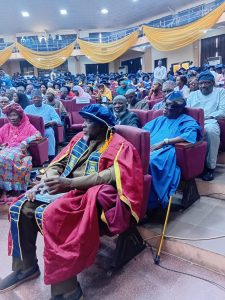
Tinubu congratulated the graduating students and urged them to remain worthy ambassadors of the university by upholding integrity, pursuing excellence, embracing innovation and contributing to humanity.
He also challenged the university’s leadership and entire academic community to sustain their commitment to scholarship, research, innovation and responsible citizenship.
Advertisement: