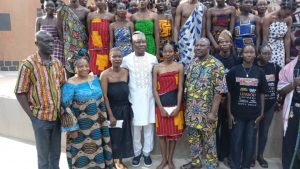
Celebrating Art, Impact: Toyin Alabi Rewards Excellence at UNILORIN Drama Night

Dr Oluwatoyin Alabi
By Abdulsalam Ibrahim Lahdan
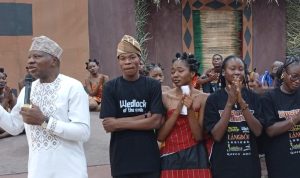
The University of Ilorin was awash with creativity, emotion, and intellectual depth as students of the Department of English and Literary Studies staged a compelling performance of Wedlock of the Gods.
The drama presentation, which highlighted the enduring relevance of African theatre, was further elevated by the remarkable philanthropic gesture of Dr. Oluwatoyin Alabi, whose intervention added lasting significance to the occasion.
Visibly moved by the students’ brilliance, discipline, and emotional intensity, Dr. Alabi reaffirmed his long-held belief in the transformative power of education and the arts.
In a moment that drew sustained applause from the audience, he announced the award of a scholarship to Afolabi Precious Olamide, alongside a ₦100,000 cash grant to assist her in settling her hostel accommodation expenses, having faced financial constraints.
Extending his support for excellence, Dr. Alabi also presented another outstanding student with a ₦100,000 cash prize in recognition of her exceptional portrayal of a motherly role.
Her performance, distinguished by natural expression, emotional depth, and commanding stage presence, resonated deeply with the audience and emerged as one of the emotional highlights of the production.
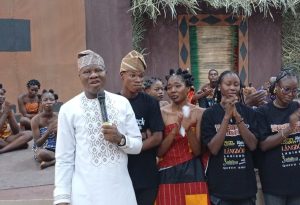
While addressing the gathering, Dr. Alabi emphasised the indispensable role of the Arts in human society, describing literature and drama as powerful mirrors that preserve culture, interrogate social realities, and inspire transformation.
He noted that creative disciplines go beyond academic exercise, serving as vital instruments for shaping empathy, consciousness, and collective identity.
He further stressed that investment in human capacity development remains the most impactful form of investment, asserting that nurturing talent, encouraging creativity, and supporting education constitute the most enduring legacy any individual can leave behind.
According to him, empowering young people intellectually and morally is essential for sustainable national development.
The event, which seamlessly blended academic rigour with cultural expression, was profoundly enriched by Dr. Alabi’s timely intervention.
His gesture earned widespread commendation from students, lecturers, and guests, standing as a powerful example of purposeful philanthropy, one that rewards excellence, restores hope, and reinforces faith in the power of education and the arts to shape a better future.