President Tinubu Tasks Nigerian Universities on AI, Research, Innovation, Graduate Employability
By Felix Ajide
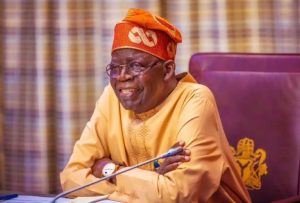
President Bola Ahmed Tinubu has challenged Nigerian universities to reposition themselves as engines of research, innovation, entrepreneurship and national transformation, warning that the future of the country depends largely on the quality of human capital produced by its tertiary institutions.
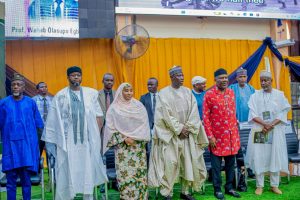
Tinubu gave the charge on Monday at the University of Ilorin, Kwara State, while declaring open the 37th General Assembly Conference of the Committee of Vice-Chancellors of Nigerian Universities (CVCNU).
The President, who was represented at the event by the Minister of State for Education, Prof. Suwaiba Sa’idu Ahmad, said Nigerian universities must move beyond the traditional role of awarding degrees and prepare graduates with the skills required to thrive in a rapidly changing global economy.
He said the emergence of artificial intelligence, digital learning platforms, virtual laboratories, automation, biotechnology, renewable energy, advanced manufacturing and data science had fundamentally changed the nature of work and the skills required for success.
According to him, the critical question confronting the university system is no longer whether universities are producing graduates, but the quality and relevance of those graduates to Nigeria’s economic and social transformation.
“The Nigeria we seek to build requires universities that can produce graduates who are not only academically sound but also innovative, ethical, digitally competent, entrepreneurial, adaptable, and capable of solving real-world problems,” he said.
Tinubu said his administration had placed education and human capital development at the centre of the Renewed Hope Agenda, stressing that sustainable economic transformation could not be achieved without corresponding investment in human capital.
He disclosed that the Federal Ministry of Education was implementing the Nigeria Education Sector Renewal Initiative (NESRI), which provides a framework for addressing critical challenges across the education sector.
At the tertiary level, he said, the initiative focuses on strengthening institutional governance, improving quality assurance, promoting research and innovation, enhancing digital transformation, expanding skills development and strengthening the relationship between education and the world of work.
The President also urged universities to strengthen their governance structures, insisting that transparency, accountability, efficiency, academic freedom and responsible management of public resources were essential to the credibility and sustainability of the institutions.
He described Vice-Chancellors as academic leaders, institutional managers, employers, financial stewards, community leaders and strategic partners of government, urging them to improve institutional planning and deploy resources prudently.
“Good governance should be seen not merely as a regulatory requirement. It should be embraced as a tool for building public confidence and strengthening the credibility and sustainability of our institutions,” he said.
Tinubu further challenged Nigerian universities to become major producers of knowledge and technology rather than relying primarily on knowledge generated abroad.
He said research findings should no longer remain largely within academic publications but must be translated into products, services, policies, technologies and practical solutions to national problems.
He therefore called on Vice-Chancellors to deepen partnerships with government, industry, development partners and communities, particularly in addressing challenges in agriculture, healthcare, education, energy, transportation, environmental sustainability, security, manufacturing and digital technology.
The President also advocated stronger support systems for young researchers, innovators and entrepreneurs to enable them to transform their ideas into viable enterprises.
On graduate employability, Tinubu said universities must urgently respond to changing labour-market demands, noting that employers increasingly required problem-solving abilities, communication skills, teamwork, digital competence, creativity, entrepreneurship and adaptability alongside academic qualifications.
The President called for stronger university-industry partnerships, expanded internship and work-based learning opportunities, entrepreneurship programmes and curricula that are responsive to labour-market needs.
“Our graduates should leave university not simply as job seekers, but as creators of value, innovators, entrepreneurs, professionals, researchers, and responsible citizens,” he said.
The President also placed the welfare and success of students at the centre of university reforms, calling for stronger systems for student safety, inclusion, mental and psychosocial well-being and academic support.
He said the Federal Government’s student financing interventions, including the Nigerian Education Loan Fund (NELFUND), were designed to reduce financial barriers to tertiary education and expand opportunities for qualified Nigerians.
However, he stressed that financial assistance must be complemented by quality academic programmes, adequate infrastructure, effective student support services and an environment conducive to learning.
“We must ensure that no talented Nigerian is denied the opportunity to fulfil their potential because of economic circumstances,” Tinubu said.
The President urged Vice-Chancellors to demonstrate courageous leadership by embracing innovation, challenging outdated practices, investing in their people and strengthening institutional partnerships.
He also called on university leaders to build institutions that were responsive to the needs of their communities and the national economy while upholding academic excellence and integrity.
According to him, universities must remain places where truth is valued, knowledge is rigorously pursued and young people are prepared to become responsible citizens and future leaders.
Tinubu said government alone could not transform Nigeria’s university system, stressing that the success of the education sector required the cooperation of Vice-Chancellors, academics, students, private-sector organisations, development partners, professional bodies, regulatory agencies, alumni and communities.
He assured that the Federal Government would continue to engage university leadership and create an enabling policy environment, but expected universities to demonstrate accountability, innovation, efficiency and measurable impact.
He described the 37th General Assembly as coming at a critical period in the evolution of Nigeria’s education system, saying decisions taken now would determine whether universities became powerful drivers of national transformation or remained constrained by longstanding challenges.
He urged participants to use the conference to deepen collaboration, exchange practical ideas and develop solutions capable of making Nigerian universities more competitive, innovative, inclusive and responsive.
The President commended the CVCNU for sustaining the conference as a platform for dialogue, reflection, collaboration and collective action among university leaders.
He also congratulated the University of Ilorin for hosting the gathering and expressed optimism that the deliberations would produce actionable outcomes capable of strengthening the nation’s university system.
Tinubu thereafter declared the 37th General Assembly Conference of the Committee of Vice-Chancellors of Nigerian Universities officially open.
The conference brought together Vice-Chancellors of Nigerian universities and other key stakeholders in the education sector to deliberate on issues affecting the development, sustainability and future of the nation’s university system.