Kwara Govt. Begins Full Digital Birth, Death Registration Across 16 LGAs

The National Population Commission (NPC) has commenced the full digital registration of births and deaths across the 16 local government areas of Kwara State, describing the initiative as a major step towards ensuring every resident has a legal identity and improving the quality of demographic data for government planning.
The Federal Commissioner representing Kwara State at the NPC, Dr. Yahaya Isiaka Alada, announced the development during a press briefing in Ilorin, saying the digital registration, powered by the VitalReg platform under the Electronic Civil Registration and Vital Statistics (E-CRVS) system, officially took effect from July 1, 2026.
Alada said the initiative followed the national rollout of the E-CRVS system inaugurated by President Bola Ahmed Tinubu in November 2023 and marked a significant transformation in the state’s civil registration process.
According to him, “This digital innovation is one of the most transformative reforms in the history of civil registration in Kwara State. It reflects the Commission’s unwavering commitment to leveraging technology to improve service delivery, strengthen data integrity, and guarantee that every birth and every death occurring in Kwara is documented accurately and securely.”
He explained that the new platform would provide faster registration services, round-the-clock online access, digital certificate issuance where applicable, improved data validation, reduced paperwork and waiting time, and a more secure database for government planning.
The commissioner noted that although thousands of births occur annually in Kwara State, many births and deaths still go unregistered, denying affected residents legal identity and limiting the availability of reliable statistics needed for policy formulation and development planning.
To improve coverage, Alada disclosed that the commission has established 92 functional registration centres across the state and is working to expand the network while strengthening the capacity of registration personnel.
He added that the VitalReg platform has been designed to integrate seamlessly with other government digital identity systems to improve public service delivery.
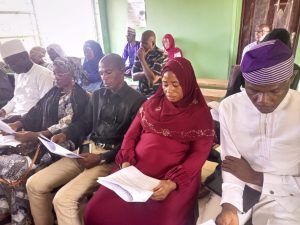
Alada also announced that the NPC had entered into a partnership with the Association of Local Governments of Nigeria (ALGON) and the National Identity Management Commission (NIMC) to decentralise birth registration and legal identity services to communities across the state.
“The alliance aims to decentralize and localize registration services at the community level, improving accessibility, enhancing operational efficiency, and strengthening grassroots participation in civil registration processes,” he said.
The commissioner revealed that the commission had reviewed charges for specialised administrative services such as record modifications, certificate reissuance, attestations and verification requests to sustain the digital infrastructure.
He, however, assured residents that birth registration and birth notification services remain highly subsidised.
“This review is not intended to create barriers to access. Birth registration and birth notification services remain highly subsidized, in line with the Commission’s commitment to achieving universal registration,” he stated.
Alada appealed to parents, healthcare providers, traditional and religious leaders, civil society organisations and the media to support the campaign by ensuring births and deaths are reported promptly.
He also commended the Kwara State Government, local government councils and development partners for supporting the commission’s activities, while urging local councils to provide additional office accommodation and logistics to strengthen operations.
“The success of this historic reform depends on the active participation of all stakeholders and every Kwaran. Together, we can build a modern civil registration system that guarantees every Kwaran a legal identity from birth, provides credible demographic data for state development, and supports effective governance and evidence-based planning,” Alada said.