Stakeholders validate Climate-Resilient WASH Investment Plan in Bauchi
By Idris Ayinde
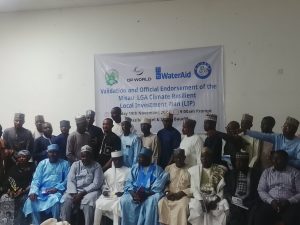
Stakeholders in the Water, Sanitation and Hygiene (WASH) sector in Bauchi State have validated the Climate-Resilient WASH Investment Plan for Misau Local Government Area of Bauchi State.
The plan is expected to provide a framework for identifying investment priorities, mobilising resources and coordinating interventions to improve sustainable WASH service delivery in the area.
Speaking at the validation exercise on Thursday, Mr Mashat Mallo, State Programme Lead, WaterAid Bauchi, described the exercise as a significant step towards improving WASH service delivery in the local government.
Mallo said Misau had been WaterAid’s focal local government for implementing its 2023–2028 strategy.
He explained that the organisation was supporting the local government to develop effective plans for WASH service delivery, covering capital investments, maintenance and operational costs.
According to him, the investment plan was developed through a life-cycle costing process to determine the resources required to sustain WASH services.
He described the validation exercise as successful, noting that stakeholders identified areas requiring corrections and updates.
“The document was validated, subject to necessary adjustments by a technical team, before its final endorsement by the local government chairman.
“The investment plan will guide resource mobilisation, coordination and alignment among stakeholders, as well as promote the sustainability of WASH investments,” he said.
Mallo called for the full utilisation of the document, describing it as a practical guide for WASH service delivery.
He urged government agencies, development partners, philanthropists and other investors to use the plan to identify communities with the greatest needs.
“This will ensure that investments address the actual priorities of the local government,” he added.
Also speaking, Dr Sanusi Waziri, Statistician-General of the Bauchi State Bureau of Statistics, said the validation exercise identified gaps in some of the data used in developing the investment plan.
Waziri said population figures, the number of functional facilities and the status of water points required further verification and updating.
He explained that accurate population data and reliable information on functional and non-functional water facilities were essential for effective planning and policy formulation.
He stressed that government interventions must be guided by credible data to ensure that resources were allocated according to the actual needs of communities.
The statistician-general said stakeholders adopted and validated the document, subject to corrections, describing the process as an opportunity for participants to reach consensus and address areas of disagreement.
Waziri called for stronger community ownership and protection of public water facilities.
“Communities, as primary beneficiaries, must take responsibility for safeguarding water infrastructure against vandalism and other forms of misuse.
“Local governments should strengthen monitoring and protection mechanisms to prevent the destruction and unlawful disposal of public water facilities,” he said.
He also called for increased private-sector participation in WASH service delivery, noting that the government alone could not meet the growing demand for water infrastructure.
He advocated investment in boreholes, rainwater harvesting, earth dams and water treatment plants to improve access to safe and affordable water.
He further observed that the rising cost of household water supply had made investment in sustainable water infrastructure imperative.
Waziri emphasised that access to quality water would improve public health, living standards and economic activities.
He urged government and private investors to explore opportunities in the water sector to address existing gaps and improve service delivery.