UNILORIN DON URGES FG TO ESTABLISH NATIONAL ANTHROPOMETRIC DATABASE FOR FORENSIC IDENTIFICATION
By Felix Ajide
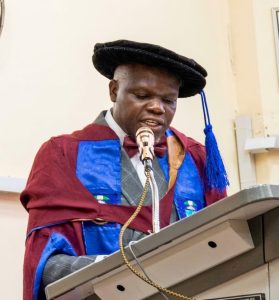
A Professor of Anatomy at the University of Ilorin, Prof. Ade Alabi, has called on the Federal Government to establish a centralised national anthropometric database covering Nigeria’s diverse ethnic groups to strengthen forensic investigations, improve clinical research and promote the development of population-specific medical and ergonomic standards.
Alabi said such a database would provide reliable scientific information on the physical characteristics and anatomical variations of Nigerians, thereby enhancing the identification of unknown human remains and supporting evidence-based medical practice.
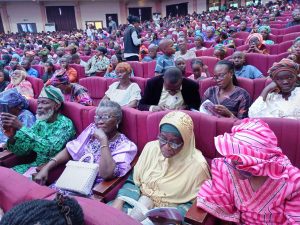
The university don made the call while delivering the 310th Inaugural Lecture of the University of Ilorin, titled “All Humans are Equal, Yet None are the Same: Shape and Size.” at the university’s auditorium.
He explained that although all human beings belong to the same species and share a common anatomical foundation, significant variations exist in their body structures, shapes and sizes as a result of genetic, environmental, cultural and socioeconomic factors.
According to him, understanding these differences is essential not only to appreciating human diversity but also to advancing medicine, forensic science, public health and other fields that depend on accurate knowledge of human anatomy.
The professor emphasised that anthropometry, the scientific measurement of the human body, provides important data for understanding individual and population differences, with practical applications in healthcare, nutrition, sports, ergonomics and forensic identification.
He noted that measurements such as height, weight, body mass index and waist circumference were useful in assessing nutritional status, monitoring growth and determining obesity-related health risks.
In the area of forensic science, Alabi stressed that population-specific anatomical measurements were particularly important in identifying unidentified human remains, warning that the indiscriminate application of foreign anthropometric standards could undermine the accuracy of forensic assessments involving Nigerians.
He therefore urged the Nigeria Police Force, the National Forensic Science Laboratory and other law enforcement agencies to adopt population-specific osteometric and morphometric reference data in medico-legal investigations.

He explained that osteometry involves the measurement of bones, while morphometry focuses on the measurement and analysis of the size, shape and structural characteristics of biological forms.
The don further called on the Federal and State Governments to invest in modern research equipment, including three-dimensional body scanners, high-resolution dermatoglyphic systems and improved access to radiological facilities such as Computed Tomography (CT) and Magnetic Resonance Imaging (MRI) in higher institutions.
He also recommended the establishment of a Centre for Human Variation and Forensic Anthropology to systematically document biological markers peculiar to different Nigerian populations.
Such markers, he explained, include cephalic indices, lip-print patterns, palatal rugae and dermatoglyphic ridge configurations, which could provide valuable information for forensic biological profiling and human identification.
Alabi advocated stronger interdisciplinary collaboration among departments and professionals in Anatomy, Forensic Science, Radiology, Surgery, Criminology and Public Health to maximise the practical benefits of research findings in human morphology.
He also cautioned Nigerians against embracing scientifically disproven claims about the human body, particularly assumptions that external body dimensions necessarily determine the size or structure of internal anatomical organs.
He maintained that scientific evidence, rather than popular beliefs and unsubstantiated assumptions, should guide public understanding of human anatomy and biological differences.
The inaugural lecturer equally highlighted the importance of anatomical knowledge in promoting preventive healthcare, urging men, particularly those above 40 years, to seek regular medical screening and professional advice concerning prostate and other urological conditions.
Prof. Alabi explained that understanding age-related anatomical changes could contribute to early detection, improved clinical assessment and better management of health conditions.
On the broader significance of anthropometric research, the professor noted that its applications extended beyond medical practice and forensic investigations.
He said the science was also relevant to sports and physical performance assessment, where body composition and physical characteristics could help evaluate athletic potential and performance.
In ergonomics, he explained that anthropometric data provided the scientific basis for designing furniture, clothing, equipment and workplaces to accommodate the physical dimensions of different population groups.
The don stressed that Nigeria’s ethnic and biological diversity should be viewed as an important scientific resource requiring systematic documentation and research rather than a limitation.
He observed that the paradox of human equality and physical differences underscored the need to recognise the common biological identity of humanity while appreciating the distinctive anatomical characteristics of individuals and populations.
According to him, the proper understanding of these variations would not only expand scientific knowledge but also provide practical solutions to challenges in healthcare delivery, criminal investigations, occupational safety and human development.
He maintained that investing in anthropometric research and modern anatomical facilities would strengthen Nigeria’s scientific capacity, improve the reliability of forensic investigations and ensure that medical and public health interventions were better suited to the country’s population.
The inaugural lecture underscored the need for Nigeria to develop indigenous scientific standards based on reliable research into its diverse population, rather than relying excessively on reference measurements obtained from other geographical and ethnic populations.