2027: Women’s Group Mobilises Against Voter Apathy, Vote Buying, Political Violence
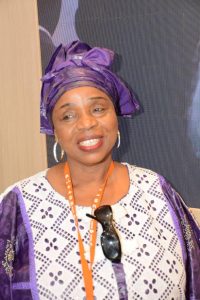
The International Women Communication Center (IWCC) has launched a grassroots mobilisation and advocacy campaign aimed at reducing voter apathy, vote buying and political violence ahead of the 2027 general elections.
The Executive Director of the centre, Dr Limota Goroso Giwa, disclosed this while speaking with journalists in Ilorin, Kwara State, saying the initiative was being implemented in collaboration with the Independent National Electoral Commission (INEC).
Giwa said the campaign was designed to promote gender inclusion, increase women’s participation in politics and elections, and discourage practices capable of undermining Nigeria’s democratic process.
She explained that the programme was currently being implemented in five local government areas in Kwara State — Baruten, Ilorin South, Edu, Moro and Kaiama — as well as five LGAs in Kogi State identified as requiring special attention to improve women’s participation in politics.
According to her, volunteers are being trained as community ambassadors to sensitise residents on gender inclusion, women’s political participation, voter apathy, vote buying and political thuggery.
The volunteers, she added, would also engage traditional, religious, political and community leaders, organise town hall meetings and facilitate discussions on peaceful and inclusive participation in the electoral process.
Giwa stressed that promoting women’s participation in politics should go beyond encouraging them to vote, urging political leaders to create more opportunities for women to contest elections and occupy positions of responsibility.
“Women are as capable as men. We need to promote gender inclusion and ensure that women are given opportunities to contribute to governance,” she said.
The IWCC executive director also called on women to support one another, saying the narrative that “women are the enemies of women” should be discarded.
She urged women to resist attempts by politicians to divide them for political advantage, noting that greater solidarity would strengthen their collective voice in politics and governance.
Giwa commended the Kwara State Governor, AbdulRahman AbdulRazaq, for what she described as his efforts to give women greater prominence in his administration through the appointment of women as commissioners and the emergence of several women in the State House of Assembly.
She urged other governors across the country to emulate the example, arguing that greater political inclusion would encourage more women to participate actively in elections.
The activist further disclosed that the organisation was strengthening its collaboration with security agencies to promote peaceful elections and address challenges discouraging women from participating in the electoral process.
She said the centre had visited the Kwara State Police Command and was planning engagements with the Department of State Services (DSS) and the Economic and Financial Crimes Commission (EFCC).
Giwa added that the organisation had also engaged the Resident Electoral Commissioner in Kwara State and relevant stakeholders in Kogi State on measures to improve citizens’ participation in elections.
She identified sexual harassment and inappropriate physical contact at polling centres as some of the factors contributing to voter apathy among women.
According to her, some women had complained of being touched inappropriately by men while standing in queues at polling units, stressing that such experiences could discourage them from returning to vote.
She also identified political violence as another major factor keeping women away from the electoral process.
Giwa therefore urged mothers to discourage their children from becoming involved in political thuggery and vote buying.
On vote buying, she called on Nigerians to reject the practice, arguing that politicians who offer money in exchange for votes are taking advantage of citizens’ economic difficulties.
She said resources that should be channelled into hospitals, roads, employment opportunities and other public services should not be diverted into temporary inducements during elections.
“Vote buying is buying your future. The money they are supposed to use for governance, to build hospitals, provide good roads and alleviate poverty, they are going to give you a token rather than develop you,” she said.
Giwa also called on Nigerian youths to become more actively involved in politics, urging older leaders to deliberately mentor younger Nigerians and prepare them for leadership.
She, however, advised youths to be patient and willing to learn from experienced leaders, warning that failure to mentor and prepare the younger generation for leadership would undermine the country’s future.
According to her, the youths would eventually assume responsibility for leading the nation and must therefore be adequately prepared for the task.
Giwa also commended the Chairman of INEC, Prof. Joash Ojo Amupitan, SAN, for what she described as notable achievements within a short period in office, describing him as a “silent achiever” committed to collaboration and synergy with relevant stakeholders.
She said such partnerships, including the collaboration between INEC and IWCC, were essential to adopting a bottom-up approach to tackling voter apathy, promoting women’s political participation and deepening electoral engagement at the grassroots.
Giwa is a grassroots leader and a member of the Governing Council of the Huairou Commission, a global movement of grassroots women’s organisations representing close to one million women in poor urban, rural and indigenous communities worldwide.