Party Primaries: Nigerians Decry Political Parties Undermining of Democracy
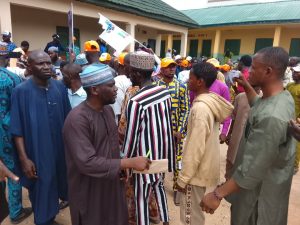
Growing dissatisfaction is trailing the conduct of party primaries across Nigeria, with many citizens and political observers accusing major political parties of sacrificing democratic principles for imposition, manipulation and the influence of money ahead of the 2027 general elections.
From Lagos and Plateau to Ondo and Gombe states and Kwara State allegations of irregularities, delegate intimidation, vote-buying, predetermined outcomes and controversial consensus arrangements have sparked widespread criticism, raising fresh concerns about the credibility of Nigeria’s democratic process.
Many stakeholders argue that the controversy extends beyond internal party affairs, warning that the recurring issues expose deep-rooted weaknesses in the nation’s political system and threaten public confidence in governance.
A senior pastor and retired editor, Rev. Felix Ajide, described the primaries conducted by several political parties as a disappointing departure from democratic ideals.
“What various political parties organised across the country in the name of primaries was nothing short of a disappointment,” Ajide said.
“Rather than transparent and democratic exercises, many of the primaries turned out to be charades characterised by chaos, stage-managed arrangements, deceit, intrigues, manipulation and outright allocation of figures.”
He alleged that while party members spent hours waiting to participate in the process, some officials were allegedly compiling results elsewhere.
“In several instances, unsuspecting and loyal party members stood patiently under the scorching sun waiting to be counted, while some party officials allegedly remained in secretariats concocting results and writing fictitious figures,” he stated.
Ajide particularly criticised developments in Kwara State, where some stakeholders accused leaders of favouring wealthy aspirants over grassroots contenders.
“What played out in Kwara State could hardly be described as consensus-building; rather, it reflected outright imposition, a blatant display of the power of incumbency and the disturbing influence of money in politics,” he added.
According to him, the trend poses a serious threat to democratic development in Nigeria and across Africa.
“At a time when insecurity continues to ravage the nation and innocent women, children and traditional rulers remain in captivity of bandits and criminal elements, Nigerians deserve leadership that emerges through credible and transparent processes,” Ajide said.
He also called on young Nigerians to become more actively involved in safeguarding democratic values.
“The youth, who represent the future of the nation, must rise to play active and constructive roles in rescuing democracy from gradual collapse. Silence and indifference will only embolden those who seek to weaken democratic institutions for personal gain,” he stressed.

Public affairs analyst Azeez Champion warned that continued manipulation within political parties could further weaken Nigeria’s democratic foundations.
Another concerned citizen, Adeyemi Ambali Ige, blamed both political actors and the wider society for the crisis.
“We Nigerians, we’re not sincere. That’s why we are not behaving as normal people,” he said.
Investigations across several states revealed claims that some primary election outcomes were allegedly predetermined before voting commenced. In some areas, rival factions reportedly organised parallel primaries, while others alleged that result sheets had already been completed before delegates arrived at voting venues.
Hon. Awolusi Ogunrinde described the exercises as deeply flawed.
“The party primary was full of irregularities, imposition of candidates and disfranchised party members from exercising their right,” he alleged.
“Governors were seen imposing their people against the will of the masses and directing party executives to write results instead of holding acceptable primary elections.”
Political observers maintain that the overwhelming influence of governors and powerful party leaders remains one of the major obstacles to transparent candidate selection in Nigeria.
Public affairs analyst Linus Imodiboh argued that Nigeria’s political culture still falls short of the institutional standards seen in mature democracies.
Questions have also emerged over delays in the announcement of some primary election results, particularly within the ruling All Progressives Congress (APC).
Critics queried why presidential primary results were announced almost immediately, while governorship and National Assembly outcomes reportedly took days before official confirmation.
Public affairs analyst Musa Aliu said the development exposed weaknesses in the country’s democratic process.
“Recently conducted party primaries completely stripped Nigerian democracy naked, especially the ones conducted by the ruling APC government,” he stated.
“For presidential primary that was conducted last, its result came out immediately. For others like governorship and National Assembly, we were told to expect results from the national working committee close to two weeks later.”
Aliu also criticised what he described as questionable vote-counting methods during some direct primaries.
“We are not even talking about the so-called direct primary whose counting was done in geometric progression by jumping numbers anyhow in full glare of cameras. This is quite unfortunate and absolutely condemnable,” he added.
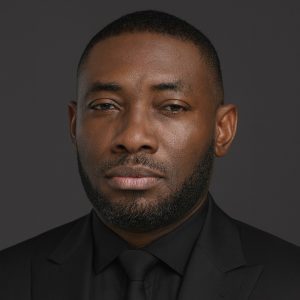
Another analyst, Sunday Babatunde, said dissatisfaction cut across major political parties.
“Across APC and PDP primaries, the complaint wasn’t just about who lost, but how the process was handled,” he noted.
For many Nigerians, the controversy reflects broader governance challenges and institutional failures affecting accountability and public trust.
Ajiboye Jacob expressed frustration over insecurity and what he described as weak legislative oversight.
“You see Nigeria is a failed state. The whole system has collapsed and the legislature has disappointed us with no meaningful legislative session. Bandits everywhere, killings everywhere, no answer from this failed system,” he lamented.
The use of consensus arrangements also generated intense criticism, with many stakeholders insisting that the process was often used to impose preferred candidates.
“There was no meeting, no unanimous written consent. It was imposition,” alleged Femi Paul.
“Ordinary members say consensus became code for decisions made in Abuja and state capitals.”
He further claimed that in some locations winners were announced despite no voting taking place.
“In many places, no election was conducted, yet results were announced. Aspirants in Plateau, Delta and Lagos showed discrepancies between votes cast and votes declared,” he alleged.
Similarly, Dada Emanuel accused political thugs of disrupting some primary elections and intimidating delegates.
“Political thugs were mobilised to disrupt senatorial primaries. Delegates complained of missing registers, no accreditation and agents locked out,” he claimed.
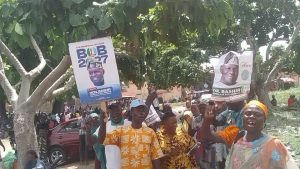
Although some observers acknowledged that a number of primaries were conducted peacefully, they argued that inconsistent application of party rules remains a major source of public distrust.
Political analyst Solomon Adebayo said perceptions of injustice were damaging confidence in the democratic process.
“Some places were peaceful, others were a mess. The problem is when the rules only apply to some people. That’s why people say this is not the democracy we desire,” he said.
Another stakeholder, Stephen Ajagbe, argued that the exercises further highlighted the growing influence of money in Nigerian politics.
“The conduct of party primaries was marred by numerous irregularities across states. It is quite obvious that moneybags are the ones securing party tickets,” he stated.
He also criticised what he described as “magical counting” during some exercises.
“The worst of it all is the magical counting witnessed in many primaries, where figures suddenly jump from 20 to 100 and in some cases from 100 to 1,000,” he alleged.
Ajagbe warned that failure to restore internal democracy within political parties could produce leaders disconnected from the aspirations of ordinary citizens.
Political analysts believe the controversies surrounding the primaries once again expose longstanding problems in Nigeria’s political system, including weak institutions, godfatherism, lack of transparency and the monetisation of politics.
As political activities intensify ahead of future elections, many Nigerians insist that only credible, transparent and accountable primary elections can restore public confidence in the country’s democracy and ensure that candidates genuinely emerge through the will of party members.