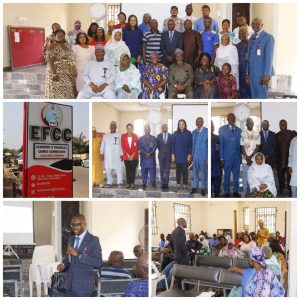
EFCC Sensitizes NPOs, CSOs on Terrorism Financing, Money Laundering in Kwara

The Special Control Unit Against Money Laundering, SCUML, of the Economic and Financial Crimes Commission, EFCC, has urged Non-Profit Organizations, NPOs, and Civil Society Organizations, CSOs, to guard against the misuse of their platforms for terrorism financing and money laundering.
The Technical Adviser to the Director of SCUML, Tope Erinlomo, gave the advice on Tuesday, April 21, 2026, during a sensitization programme held in Ilorin, Kwara State, while addressing members of NPOs and CSOs.
He noted that the organizations occupy strategic positions in society and must not allow individuals with ulterior motives to exploit them for illicit activities. According to him, the programme was designed to equip the groups with the necessary knowledge to prevent money laundering and terrorism financing.
Citing the provisions of the Money Laundering (Prevention and Prohibition) Act 2022, Erinlomo emphasized the importance of proper record-keeping.
He explained that Section 8 of the Act mandates all financial institutions and Designated Non-Financial Businesses and Professions, DNFBPs, including NGOs, to preserve records of transactions, customer identification, and other relevant documents for a minimum of five years.
“The aim is to ensure transparency and make such records available for inspection by regulatory authorities when necessary,” he said.

Erinlomo further urged participants to carry out thorough identification of donors and personnel within their organizations as part of their Know Your Customer, KYC, obligations.
He explained that NGOs and NPOs are required to verify the identities of donors, beneficiaries, and partners using reliable and independent documentation, including valid means of identification and proof of address.
He also stressed the need for due diligence on employees, volunteers, and key officers to ensure they are not linked to illicit financial activities, adding that organizations must maintain accurate records and monitor internal operations to prevent abuse.
The SCUML official also encouraged organizations to conduct regular risk assessments to detect and prevent attempts by criminal elements to exploit their platforms.
“You are required to properly identify and verify your donors, especially in cases involving large or unusual donations, foreign contributors, or politically exposed persons, where enhanced due diligence becomes necessary,” he added.
In his reaction, a participant, Musa Aliyu, commended the EFCC for the sensitization programme, noting that the fight against terrorism financing requires collective effort.
He stressed that the battle cannot be won without the active collaboration of stakeholders working closely with the EFCC to curb the menace.