HBBA launches report on gender, death penalty in Nigeria
By Ibironke Ariyo
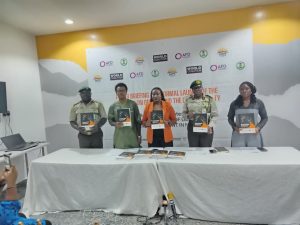
The Hope Behind Bars Africa (HBBA) on Tuesday launched a research report analysing the experiences of women on death row in Nigeria and calling for gender-responsive reforms in the criminal justice system.
The report titled “Beyond Her Sentence: A Technical Analysis of Gender and Capital Punishment in Nigeria” was presented in Abuja by HBBA’s Executive Director, Funke Adeoye.
Adeoye said the study was supported by the World Coalition Against the Death Penalty and the Agence Française de Développement (AFD).
She said that the launch aligned with activities marking the 16 Days of Activism Against Gender-Based Violence, adding that the research lasted 10 months and followed a stakeholder validation conducted earlier in the year.
She also said that the research was carried out by Ms Ogechi Ogu, and Prof. Ibrahim Bello of Bayero University, Kano, adding that their expertise in criminal justice, sociology and human rights guided the research design and fieldwork.
According to her, HBBA worked with the Nigerian Correctional Service (NCoS) to access 10 custodial facilities across the country where official records of 82 women on death row were verified.
“60 trauma-informed interviews were conducted across 10 states.
“The facilities visited include old Benin Custodial Centre, Kirikiri Female Correctional Centre, Port Harcourt Maximum Security Correctional Centre, Ibara Custodial Centre in Abeokuta, Kano Central Medium Custodial Centre.
“Others are Maiduguri Maximum Security Custodial Centre, Enugu Maximum Custodial Centre, Birnin Kebbi Medium Facility, Old Minna Custodial Centre, Suleja Custodial Centre and Uyo Custodial Centre,” she said.
Adeoye said Nigeria retained the death penalty under statutory, customary and Sharia legal systems saying that the punishment applied to offences such as murder, armed robbery, adultery and same-sex relations in some jurisdictions.
She said women in the criminal justice system face gender-based vulnerabilities including limited access to legal support, poverty, cultural pressures and bias in investigations and trials.
Quoting findings from the report, Adeoye said nearly half of the women on death row were between 18 and 35 years.
She said over one-third had no formal education, while only 10 per cent attained tertiary education, adding that most of the women were mothers, leaving children in unstable care arrangements.
She also added that more than one-third had experienced gender-based violence such as domestic abuse, forced marriage and child marriage.
Adeoye said many of the women lacked knowledge of the laws under which they were convicted and that more than half of them considered their trials non-transparent.
She said stigma from families and communities deepened their emotional distress, especially for those charged with sexual or marital offences.
Adeoye said more than 80 per cent of the women interviewed believed rehabilitation was possible and had been exposed to vocational training in custodial facilities.
She, however, said many of them viewed the death penalty as neither just nor effective.
She also said inputs from correctional officers, Civil Society Organisations,(CSOs), defence lawyers and other stakeholders informed the recommendations in the report.
“The report recommends prevention through awareness and early intervention, including campaigns against child marriage, domestic abuse and economic exploitation.
“It also proposes programmes to improve women’s legal literacy and access to protection. The report also calls for gender-sensitive training for police, prosecutors and judicial officers,” she said.
The HBBA boss said the study also recommended stronger referral systems for survivors of violence to access counselling, legal aid and other services before criminalisation occurs.
“The report urges the Federal Government to declare a moratorium on executions as a first step toward abolition in line with international human rights standards.
“The report also calls for legal and systemic reforms, including gender-sensitive sentencing, review of discriminatory evidentiary rules, expanded legal aid and improved transparency in trials,” she added.
Adeoye called on government, Civil Society, legal practitioners and communities to prioritise reforms that protect vulnerable women, adding that HBBA would review compelling cases of women on death row for possible appeal, clemency or other interventions.
She said the report shows that the experiences of women on death row reflected broader systemic inequalities.
She said abolition of the death penalty was both a legal necessity and a moral obligation, adding that the organisation would continue to advocate for justice system reforms and rehabilitation-focused approaches.
In his goodwill message, The NCoS Controller General, Mr Sylvester Nwakuche, pledged the commitment of the Service to reforms that address gender-related challenges faced by women on death row in Nigeria.
Nwakuche who was represented by Dr Adenike Sheyindemi, an Assistant Controller of Corrections and Gender Advisor, NCoS, said the initiative by HBBA reflected a strong commitment to social justice.
This, he said, included human rights and the welfare of individuals in contact with the criminal justice system.
He described the report as a groundbreaking study that examined the relationship between gender and capital punishment in Nigeria, adding that it provided a technical analysis of the pathways that lead women to death sentences as well as their lived experiences on death row.
He said the report was not only a research document but also an important advocacy tool that highlights systemic biases affecting women within the criminal justice system.
She said that its findings offer insights that could shape policy, practice and national conversations on justice and equality.
“The Service considers the report an essential resource for policymakers, legal professionals, human rights advocates and the wider public. The service hopes the research will inspire critical reflection and positive change across the justice sector,” he said.
Representatives from World Coalition Against the Death Penalty and the Agence Française de Développement (AFD), and other relevant stakeholders commended the HBBA for the research work.