Unilorin VC Rallies Stakeholders to Turn Farm Waste into Wealth for National Growth
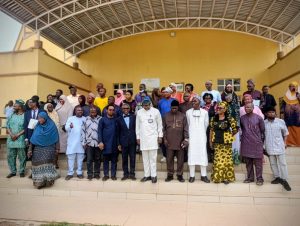
The Vice Chancellor of the University of Ilorin, Professor Wahab Olasupo Egbewole, has called for stronger collaboration among government agencies, researchers, farmers and private investors to unlock Nigeria’s vast agricultural potential by converting waste into wealth.
Egbewole made the call at the second edition of the “Town and Gown Workshop” organised by the Faculty of Agriculture of the University of Ilorin in Ilorin, Kwara State.
The workshop, which focused on regenerative economy and opportunities in transforming agricultural waste into valuable products, drew participants from academia, government institutions and the private sector.
Represented by the Deputy Vice Chancellor (Management Services), Professor Adegboyega Adisa Fawole, the Vice Chancellor said the initiative aligns with the Renewed Hope agenda of President Bola Ahmed Tinubu’s administration, particularly its focus on wealth creation and economic diversification through agriculture.
According to him, “The transformation of agricultural waste into wealth is not just an environmental necessity but an economic opportunity.
“This workshop provides an avenue for ministries, agencies, researchers and farmers to come together and make farming more attractive and productive.”
He described the programme as an eye-opener for participants, especially students and agro-entrepreneurs who showcased innovative products derived from farm waste.
While commending the Faculty of Agriculture for organising what he termed an impactful event, Egbewole urged the organisers to further improve the product exhibition segment in future editions to attract more investors and industry players.
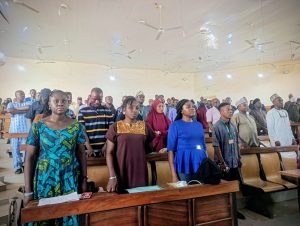
In his welcome address, the Dean of the Faculty of Agriculture, Professor Israel Ogunlade, said the essence of the workshop was to bridge the gap between research findings and community needs. He explained that the faculty is committed to ensuring that knowledge generated within the university translates into tangible benefits for farmers and rural communities.
“Our goal is to see research positively impact society while also integrating traditional knowledge to strengthen Nigeria’s agricultural sector,” Ogunlade said. “We are working to change the mindset of our people to see waste not as refuse, but as a resource that can promote healthier living and help mitigate climate change.”
Also speaking, the Acting Head of the host department, Dr. Kehinde Olayemi Affinnih, who is steering sustainability efforts under the UNIDO/EU 2025 Programme, urged businesses and participants to embrace circular economy principles. She stressed the need to cut waste and improve resource efficiency in farming systems.
Affinnih noted that revisiting indigenous farming practices used before the advent of chemical fertilisers could help farmers enrich soil organic matter naturally. “To effectively convert waste into valuable soil enhancers, we must rediscover traditional methods that sustained soil health for generations,” she said.
Earlier, the Chairman of the Organising Committee, Professor Adebisi Adeyina, said the workshop would contribute significantly to Nigeria’s economic growth, particularly through improved utilisation of crop residues and other agricultural by-products.
Highlights of the event included paper presentations on regenerative economy and waste-to-wealth opportunities by Professor B.S. Bada, urban farming and sustainable food production by Professor P.A. Babajide, and technology-driven farming solutions by Mr. Obafemi Bankole.
The workshop was attended by members of the university management, principal officers, representatives of key agricultural institutions and agro-based product dealers, reflecting a growing commitment to repositioning agriculture as a driver of sustainable development in Nigeria.