KWASU Professor Calls for Legal Reforms to Protect Polygynous Families in Nigeria
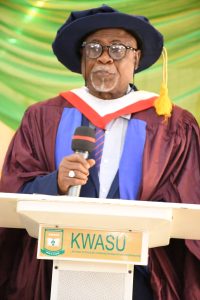
A Professor of Comparative Law at Kwara State University (KWASU), Malete, Professor Najeem Adeyemi Ijaiya, has called for a comprehensive review of Nigeria’s legal framework to end what he described as systemic discrimination against polygynous families, insisting that the law must truly function as an instrument of social change.
Professor Ijaiya made the call on Tuesday, January 21, 2026, while delivering the 2nd Valedictory Lecture of the Department of Islamic Law at the KWASU Mini Convocation Arena. The lecture, titled Law as an Instrument of Social Change: Any Hope for Polygyny?, was delivered under the chairmanship of the Vice-Chancellor, Professor Shaykh-Luqman Alade Jimoh.
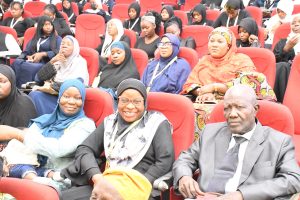
Speaking before academics, jurists, students and invited guests, the senior legal scholar argued that Nigeria’s plural legal system unfairly elevates monogamous marriage under statutory law while marginalising marriages conducted under Islamic and customary laws, where polygyny is recognised.
“Nigeria is a plural society with plural legal systems. The law should not impose a one-size-fits-all model of marriage inherited from colonial history on a culturally diverse people,” Ijaiya said. “If law is truly an instrument of social change, then polygyny should not be treated as a legal outcast.”
Drawing from his nearly three decades of academic engagement, Professor Ijaiya said he had consistently challenged the law to respond proactively to social realities, particularly in family and matrimonial matters. He expressed concern that polygyny, despite its recognition under Islamic and customary law, is often criminalised or indirectly discouraged through statutory provisions.
“As a product of polygyny myself, I am deeply concerned that polygyny is being painted negatively in Nigeria, not only by social attitudes but through legal instruments,” he noted. “This raises a fundamental question: is polygyny undeserving of legal protection, or has the law simply failed in its duty?”
The professor criticised the offence of bigamy under Nigerian criminal law, describing it as discriminatory. According to him, while a man in a polygynous marriage can freely convert to monogamy without legal consequences, a monogamous man who chooses polygyny faces criminal sanctions.
“It is constitutionally ridiculous that a man can change his religion freely but cannot change his marriage system without the threat of punishment,” he said. “If monogamy is not an offence for someone leaving polygyny, then bigamy should not be an offence for someone choosing polygyny.”
Professor Ijaiya also highlighted areas where existing laws, policies and administrative practices disadvantage polygynous families, including health insurance enrolment limits, asset declaration requirements for public officers, and the superior recognition accorded to statutory marriage certificates.
He argued that the National Health Insurance Scheme, for instance, was designed with monogamous families in mind, leaving many children from polygynous homes inadequately covered unless higher premiums are paid.
On constitutional issues, the scholar questioned why legislative powers over monogamous marriage rest with the National Assembly, while Islamic and customary marriages are effectively localised, warning that such imbalance contradicts the spirit of equality in a federal system.
He welcomed the recent Court of Appeal decision in Mohammad v. Mohammad (2024) as a landmark step towards justice, noting that the ruling affirmed the inheritance rights of children from subsequent Islamic marriages, even where the deceased had earlier contracted a statutory marriage.
“This decision is proof that the law can still rise as an instrument of social change,” he said. “It affirms that constitutional rights cannot be curtailed by colonial-era statutes to the detriment of religious and cultural practices.”
Addressing concerns about gender equality, Professor Ijaiya rejected the blanket portrayal of polygyny as oppressive to women, arguing that abuse is not exclusive to any marriage system.
“What the law should do is regulate polygyny to ensure justice, consent and equity, not criminalise it,” he said. “Many women voluntarily enter polygynous unions, and the law has a duty to protect their dignity, property and welfare.”
As part of his recommendations, the professor called for equal legal recognition of polygynous marriages, optional civil registration without fear of illegality, reforms to discriminatory policies, and the enactment of Islamic and Customary Marriages Laws by states to complement the Marriage Act.
He also proposed the establishment of a KWASU Centre for Law and Social Change to promote research-driven legal reforms in response to Nigeria’s evolving social challenges.
Concluding the lecture, Professor Ijaiya expressed optimism about the future, insisting that polygyny has a place within Nigeria’s constitutional democracy if approached with honesty and reform.
“There is hope for polygyny in the law, but that hope will not come from silence,” he said. “Law must rise above prejudice and reflect the plural values of our society. That is the essence of justice and the true promise of social change.”
The valedictory lecture marked a significant moment in the history of the Faculty of Law at KWASU, as Professor Ijaiya prepares to retire from active academic service after decades of teaching, research and advocacy in Nigerian legal scholarship.