Women in politics push for stronger protection against technology-facilitated GBV
By Diana Omueza
The National Women Leaders Forum of Political Parties in Nigeria (NWLFPPN) has called for stronger digital protection systems against Technology-Facilitated Gender-Based Violence (TF-GBV) targeting women in politics.
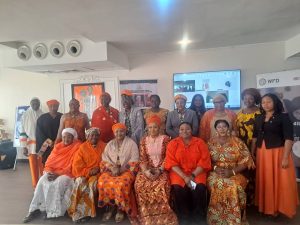
The President of the group, Mrs Amina Darasimi-Bryhm, made the call during a high-level dialogue with the theme “Advancing Feminist Leadership to End Digital Violence Against Women in Politics in Abuja on Thursday.
The News Agency of Nigeria (NAN) reports that the event, supported by the Westminster Foundation for Democracy (WFD), was to mark the 2025 16 Days of Activism Against Gender-Based Violence (GBV) and the 2025 International Human Rights Day.
GBV refers to any act of violence directed against an individual based on his or her gender.
It is a widespread menace that affects people of all ages and backgrounds, manifesting in various forms such as physical, sexual and psychological violence, including intimate partner abuse, trafficking and forced prostitution, considered as serious violation of human right.
NAN also reports that the 16 Days of Activism Against GBV is a United Nations’ international campaign that runs from Nov. 25, which is the International Day for the Elimination of Violence Against Women, through Dec. 10, which is the International Human Rights Day.
This period highlights violence against women as one of the most pervasive violations of human rights worldwide.
The campaign started in 1991 as a strategic effort to unite and amplify calls for the elimination of violence against women and girls and each year, the 16 Days of Activism galvanises organisations around the world and draws the attention of governments to the urgent and critical issues around GBV.
The theme for the 2025 16 Days of Activism is “UNiTE to End Digital Violence against All Women and Girls.”
Darasimi-Bryhm, therefore, said adopting robust digital safety measures was essential to protecting women’s participation, security and effectiveness in political leadership roles nationwide.
According to her, increasing cases of technology-facilitated GBV require stronger policies, awareness and safety frameworks to protect women in politics and girls aspiring to political leadership.
“Digital platforms are increasingly weaponised to silence, shame and exclude women from political participation through cyberbullying, sexual harassment, disinformation, stalking, doxxing threats and hate speech,” she said.
She said that online abuse discourages women’s political involvement and contributes to declining participation in politics.
Darasimi-Bryhm noted that while digital technologies support democratic engagement, they had also become unsafe spaces where GBV thrives without adequate protective interventions.
She said addressing these risks was necessary to uphold human rights, strengthen gender equality and protect Nigeria’s democratic integrity from digital harms.
Mr Adebowale Olorunmola, the Country Director of WFD, said the foundation remained committed to strengthening political parties and promoting women’s leadership and inclusive political participation.
Olorunmola, represented by WFD Programmes Manager, Ms Sola Folayan, stressed the need for better gender representation in Nigeria’s politics and encouraged continued support for women’s active leadership.
“At Westminster Foundation for Democracy, we work to strengthen political parties through inclusive participation and support the National Women Leaders Forum to build capacity for promoting gender issues within party structures,” she said.
Dr Daniel Ukpai, the Director of Programmes at the Development Research and Projects Centre (DRPC), described technology-facilitated GBV as a fast-growing threat that escalated with Nigeria’s digital expansion from 2010.
Ukpai said visible women in politics experience increasing online attacks, identity-based abuse, sexualised slurs, fake news, and derogatory messages, because party codes and laws are silent and protections are insufficient.
He said TF-GBV remained underreported, stating that the Nigeria Demographic and Health Survey (NDHS) data shows two per cent of women aged 15–49 had experienced forms of digital-related abuse which was an underestimation according to recent researches.
Ukpai urged policy updates, better platform moderation, stronger regulations discouraging anonymous digital attacks, and centralised data collection to guide protective interventions.
Mrs Sa’adatu Abdullahi, the National Publicity Secretary of the group, called for national laws to address digital violence against women in politics and stricter accountability by social-media platforms.
Abdullahi also urged adoption of feminist, gender-sensitive party policies banning political gender-based violence, alongside confidential reporting and protection systems within political parties.
She called for mandatory training on feminist leadership and digital safety, improved women’s digital-security skills, and strong legal, psychosocial, and rapid-response support for survivors.
She encouraged cross-party solidarity to publicly condemn attacks on female political actors and promote regular dialogues to track digital-violence trends and coordinate collective advocacy.
Abdullahi urged party leaders to fund and implement GBV resolutions and advised tech companies to invest in local content moderation and stronger accountability systems.
The group reiterated that ending digital violence against women in politics is essential for Nigeria’s democratic future, not solely a women’s issue.